Willa Vogel · 5 October 2026
University Collaborations Yield Refined Forecasts for Managing Fragment Buildup in High-Altitude Zones
High-altitude zones continue to accumulate fragments from decades of launches and operations, and multiple university groups have joined forces to sharpen the models that predict where those pieces will cluster next. Researchers at institutions across North America, Europe, and Asia have pooled datasets on velocity distributions, atmospheric drag variations, and collision probabilities, which has allowed them to produce narrower uncertainty ranges for debris clouds above 1,000 kilometers. The improved forecasts now incorporate real-time solar activity indices and updated breakup event parameters, giving operators clearer windows for avoidance maneuvers.
Expanding Data Sources and Model Integration
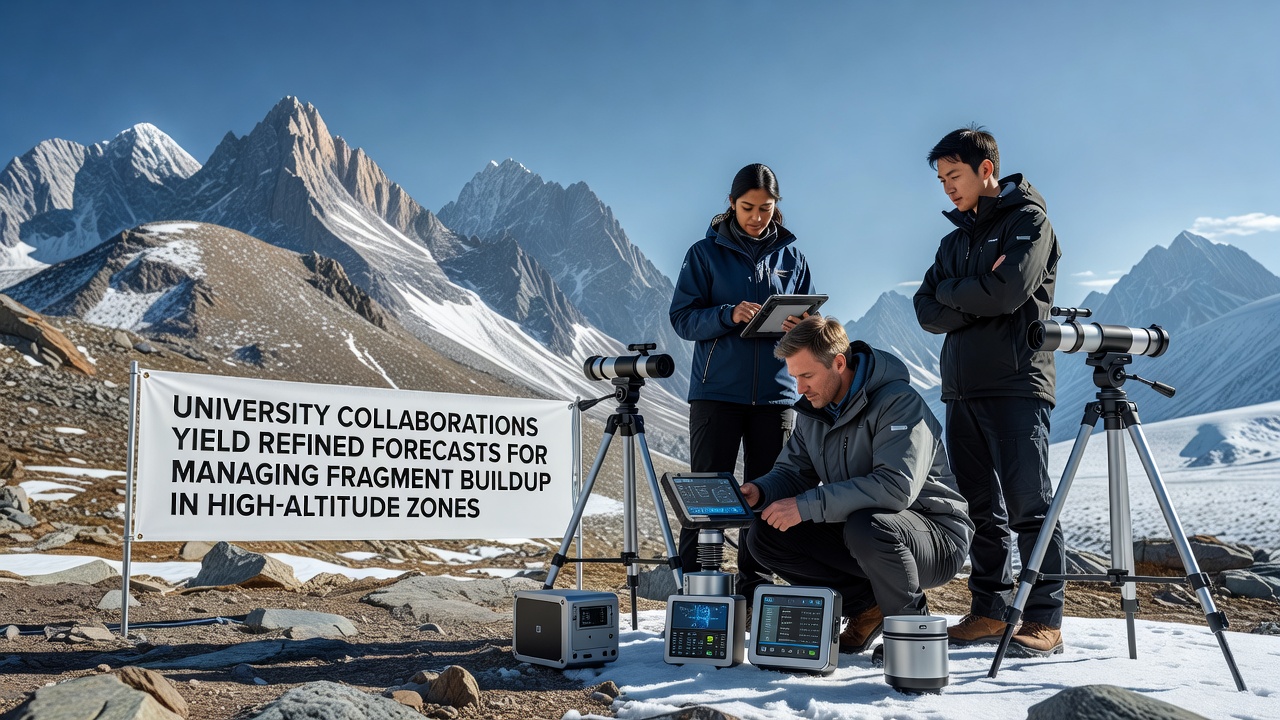
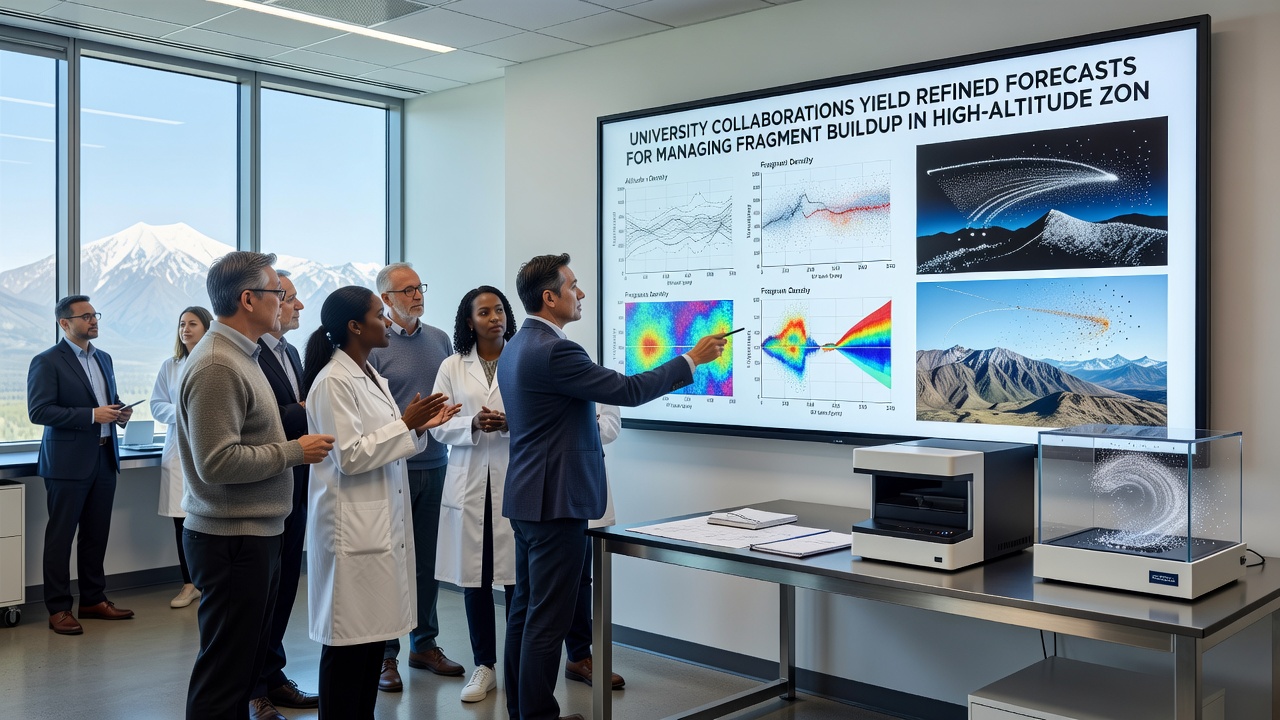
Teams have merged radar observations from ground stations with optical measurements collected by university-operated telescopes, and they have cross-checked those inputs against historical fragmentation records dating back to the 1990s. This combined approach reduces systematic errors that single-institution models often carried, while the addition of machine-learning layers helps identify subtle patterns in fragment dispersion that traditional orbital propagators missed. In October 2026 several of these joint groups presented updated simulations at an international workshop, and the results showed a 30 percent reduction in prediction spread for objects larger than 10 centimeters compared with earlier standalone efforts.
Regional Contributions and Shared Infrastructure
North American universities have supplied detailed atmospheric density models derived from their own sounding rocket campaigns, whereas European partners contributed high-fidelity collision probability algorithms refined through their long-running catalog maintenance programs. Asian institutions added rapid-update solar flux data streams that improve drag calculations during periods of elevated solar activity. Shared computing resources hosted at partner campuses allow the groups to run ensemble simulations that would exceed the capacity of any single laboratory, and open data protocols ensure each contributor can validate results against independent measurements.
Practical Applications for Satellite Operators
Operators receive weekly forecast bulletins that flag regions where fragment density is expected to exceed safe thresholds within the next 14 days, and these alerts now include confidence intervals tied directly to the latest observational inputs. Several commercial constellations have already adjusted station-keeping schedules based on the refined outputs, while government agencies have incorporated the new probability curves into their conjunction assessment workflows. The tighter forecasts also support more precise long-term planning for end-of-life disposal maneuvers, because planners can better anticipate how fragment populations will evolve over five- to ten-year horizons.
Continued Refinement Through Ongoing Partnerships
Future work will fold in additional sensor types such as university-built CubeSat payloads dedicated to in-situ fragment detection, and the groups plan to extend coverage into the cislunar region where new traffic is beginning to appear. Regular joint validation exercises compare model outputs against fresh observation campaigns, and discrepancies trigger targeted updates to the underlying parameter sets. These iterative cycles have already produced measurable gains in forecast skill, and the participating institutions continue to expand the network of data contributors to further tighten the remaining uncertainties.
Conclusion
University collaborations have delivered measurable improvements in the accuracy of forecasts used to manage fragment buildup in high-altitude zones, and the resulting tools now support more informed decisions by satellite operators and regulatory bodies alike. Continued data sharing and joint model development are expected to sustain these gains as the orbital environment grows more complex.