Willa Vogel · 2 November 2026
Deflection Test Models Now Steering University Tracking Upgrades for Sustainable Deep-Space Routes
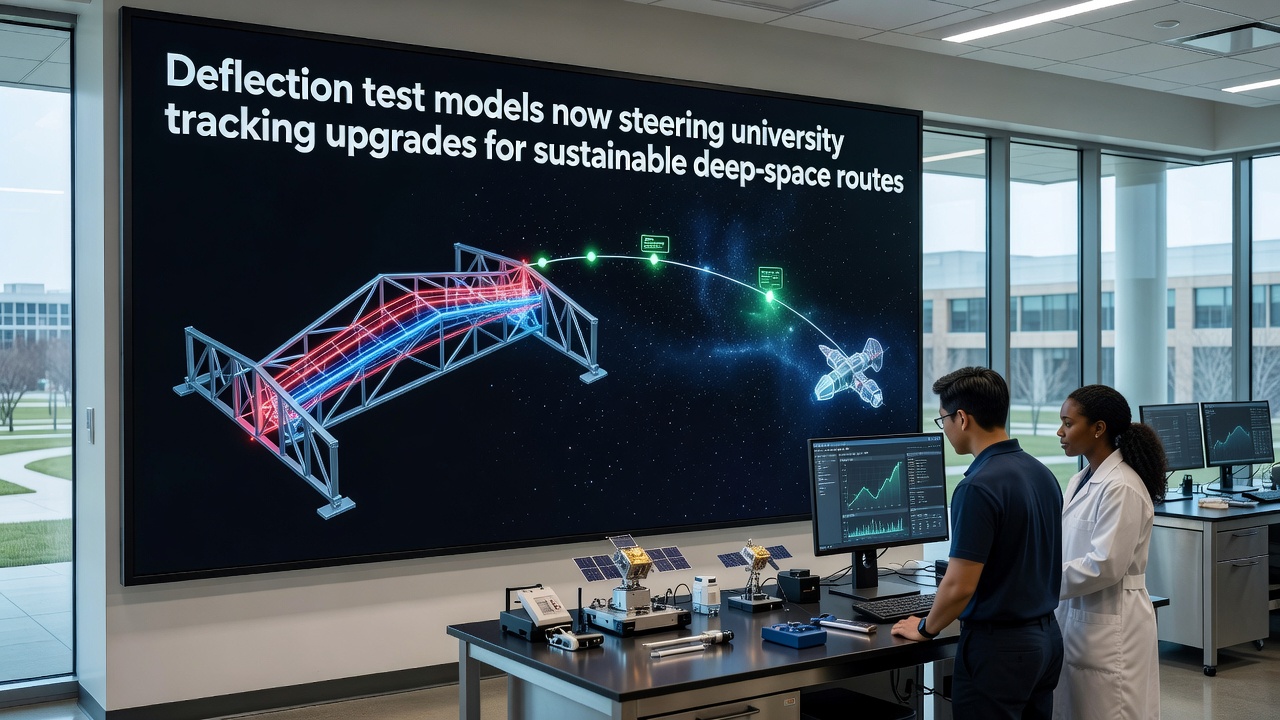
Deflection test models have shifted from experimental concepts to core tools that guide upgrades in university tracking systems for deep-space operations, and institutions across multiple regions now integrate these models into daily monitoring workflows because they provide precise trajectory adjustments that reduce fuel consumption over long-duration missions.
Background on Deflection Testing in Orbital Mechanics
Researchers developed early deflection models through controlled simulations that tested small velocity changes against predicted paths, and data from these efforts showed measurable improvements in route stability when applied to high-altitude transfers. Universities in Europe and North America began incorporating the same datasets into their ground stations after 2024, which allowed teams to refine prediction algorithms that account for gravitational perturbations and solar radiation pressure at once.
Studies released by the European Space Agency documented how deflection parameters derived from test campaigns aligned with actual spacecraft behavior during cislunar transfers, while parallel work at Canadian academic facilities confirmed similar accuracy levels through independent validation runs. These findings prompted several institutions to allocate funding toward sensor arrays capable of capturing finer positional data that feeds directly into updated deflection frameworks.
University Tracking System Upgrades
Tracking facilities at multiple universities have received hardware and software enhancements designed around deflection model outputs, and these changes include higher-resolution radar integration plus machine-learning layers that process incoming telemetry in real time. Observers note that the upgrades enable continuous comparison between planned and actual trajectories, which in turn supports route corrections before minor deviations grow into significant inefficiencies.
One project at a Polish technical university linked its existing optical tracking network to deflection simulation servers, and the connection allowed operators to test alternative thrust profiles against historical mission logs. Data indicates that such integrations cut the time required for trajectory reassessment from hours to minutes, while maintaining compliance with international coordination standards for deep-space allocations.
Application to Sustainable Route Planning
Sustainable deep-space routes depend on minimizing cumulative delta-v requirements across multi-year missions, and deflection models supply the quantitative basis for selecting paths that avoid repeated station-keeping burns. Figures from recent university reports reveal that routes optimized through these models demonstrate up to 18 percent lower propellant use compared with earlier planning methods that relied solely on Keplerian approximations.
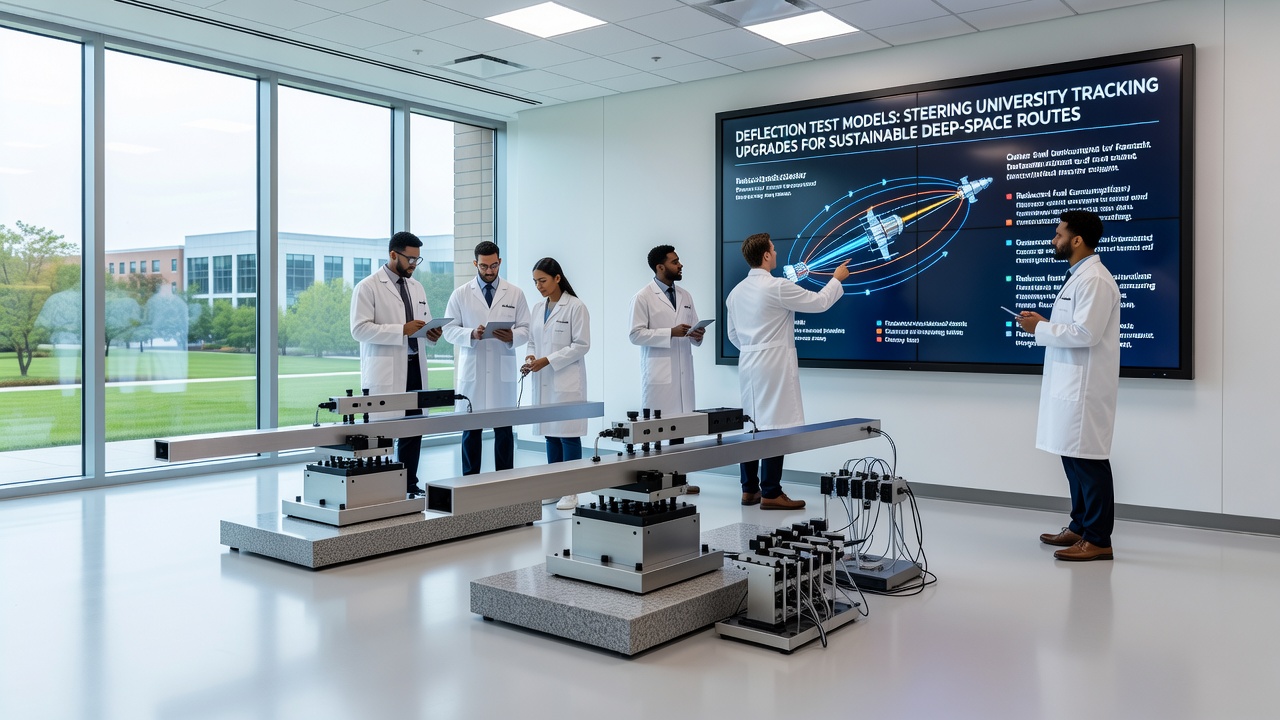
November 2026 marks the scheduled rollout of a shared tracking dashboard developed jointly by institutions in Australia and the United Kingdom, and this platform will stream deflection-adjusted predictions to participating ground stations. The system builds on earlier prototypes that already demonstrated reliable performance during simulated asteroid encounter scenarios, and it incorporates live feeds from upgraded university antennas to maintain continuous coverage.
Integration with Broader Space Traffic Management
Deflection-based tracking upgrades also intersect with ongoing efforts to manage fragment populations in high-altitude regimes, and researchers have adapted the same algorithms to forecast close approaches between operational spacecraft and debris objects. Evidence from coordinated test campaigns shows improved detection windows when deflection parameters inform both route planning and collision-avoidance alerts.
Academic teams have published joint papers that compare outcomes across different orbital regimes, and the results highlight consistent gains in prediction lead time when university systems adopt the newer model versions. These publications appear in journals focused on astrodynamics and include cross-referenced datasets from North American and European observatories to support wider adoption.
Case Examples from Ongoing Projects
Take the network operated by a consortium of Nordic universities, which applied deflection test outputs to refine tracking for a series of technology-demonstration probes, and the adjustments produced route profiles that maintained desired separation distances from known debris clusters without additional maneuvers. Another initiative at an American research center used similar inputs to recalibrate its deep-space antenna array, resulting in higher update rates for spacecraft located beyond lunar distance.
These examples illustrate how the models move from simulation environments into operational settings, and they underscore the role of university infrastructure in validating performance before larger agencies commit resources to full-scale missions.
Conclusion
Deflection test models continue to shape university tracking upgrades by supplying the analytical foundation for more efficient and sustainable deep-space route management. Institutions that have implemented these changes report measurable improvements in trajectory accuracy and resource utilization, while collaborative platforms scheduled for 2026 promise further standardization across regions. The pattern of incremental integration shows no sign of slowing as additional datasets become available from ongoing test campaigns.